The same data, entered by hand — now it flows through on its own.
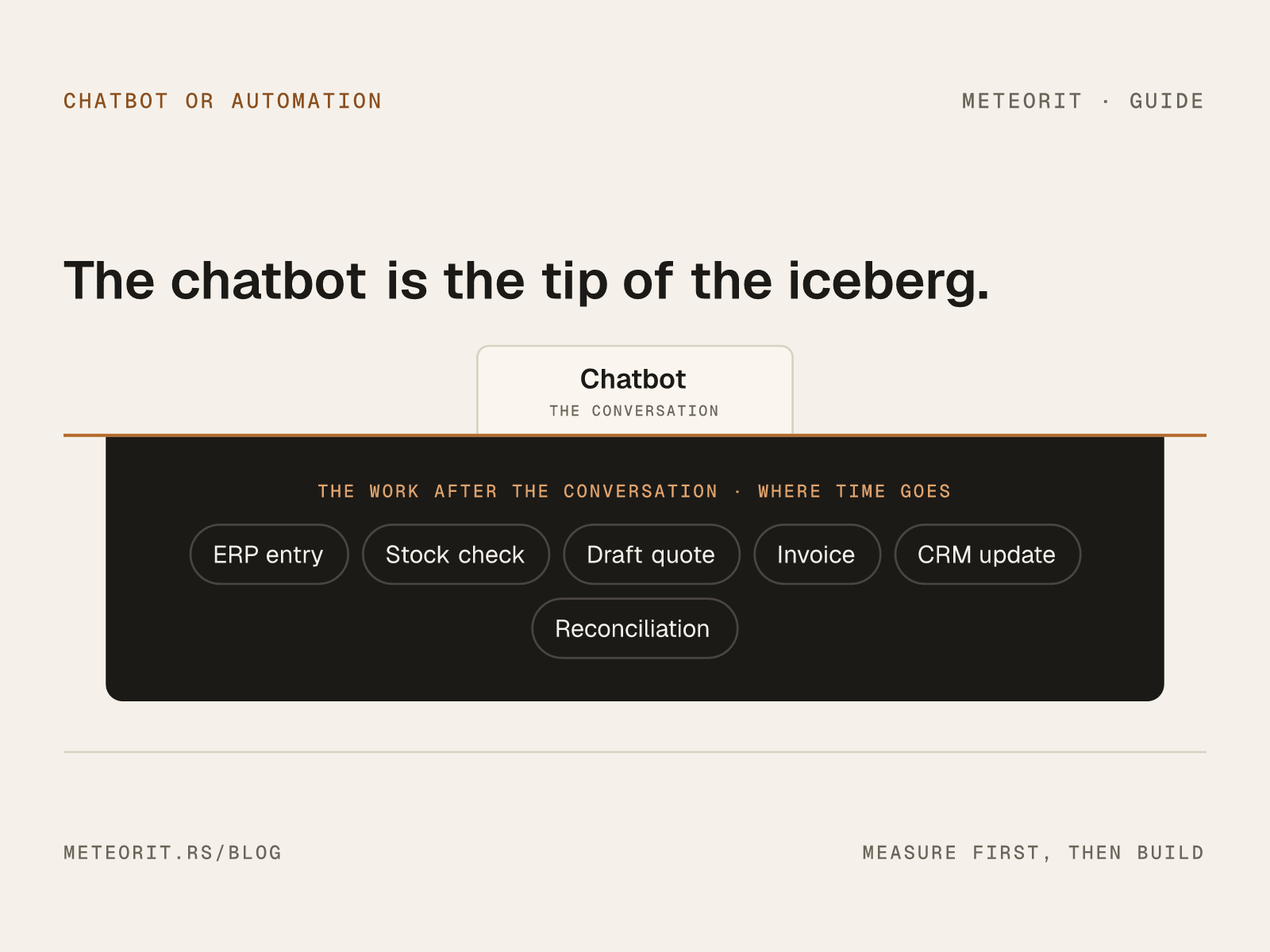
A paper form, a ticket and four ERP documents, all retyped from data that already existed. Three systems connected, and manual input became a quality check.
Most companies have tried AI. Few have changed how the work gets done. We measure where your hours actually go, then rebuild the process around what we find.
We don’t sell off-the-shelf licences or generic platforms. We go inside a business — family firms to enterprise — map where the time and money leak, and redesign the work around AI.
Most AI adoption fails because the tools land on processes nobody examined. We examine first, and put a number on every inefficiency we find.
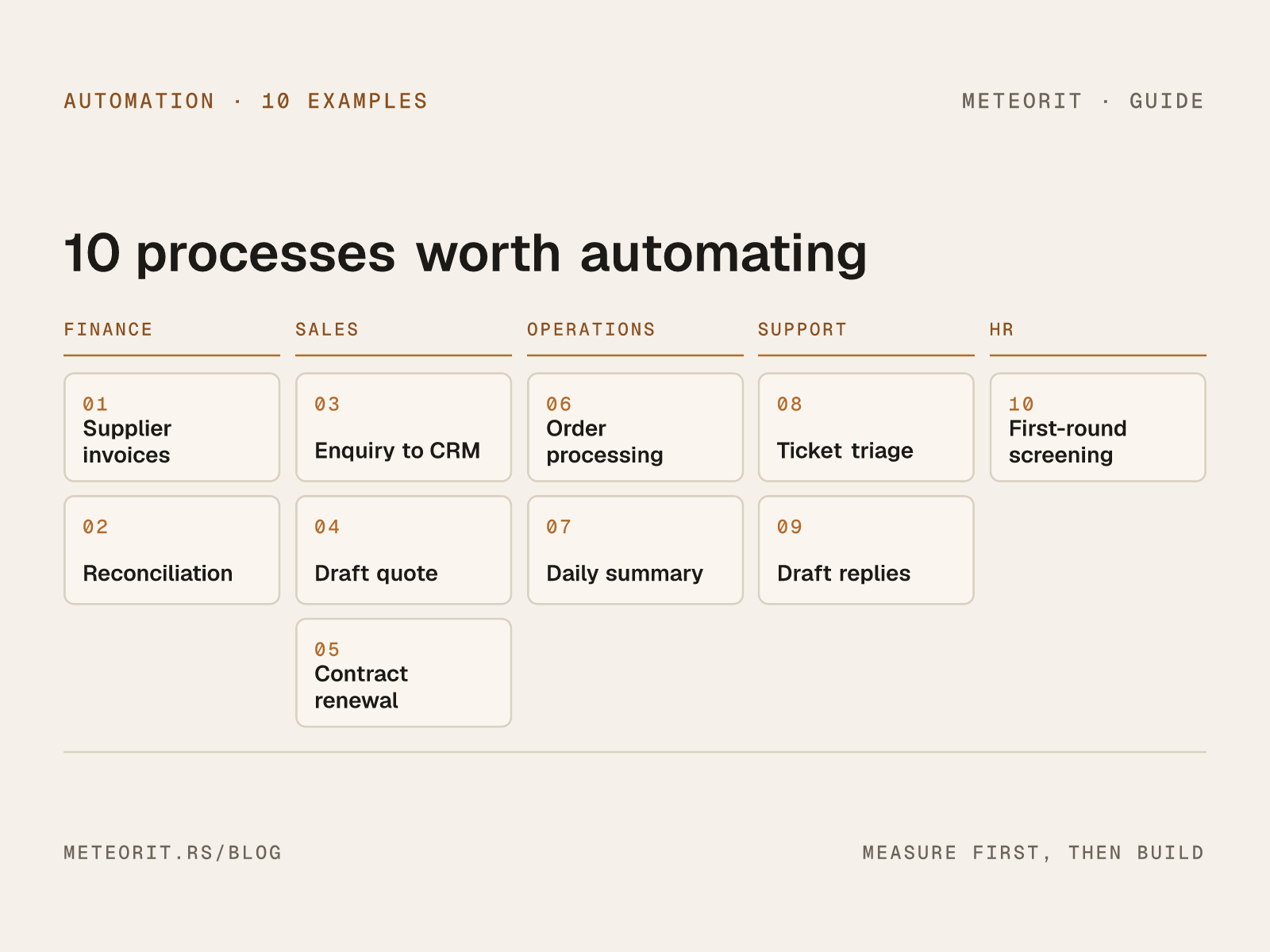
No fixed menu. These four turn up in almost every diagnostic — we build the one costing you the most hours first, and leave the rest alone until it earns its place. If your problem is something else, we’ll say so.
When the diagnosis calls for a platform, we deploy Integral.
Explore Integral →The goal isn’t a smaller team — it’s better work. Each phase ends with something you can hold.
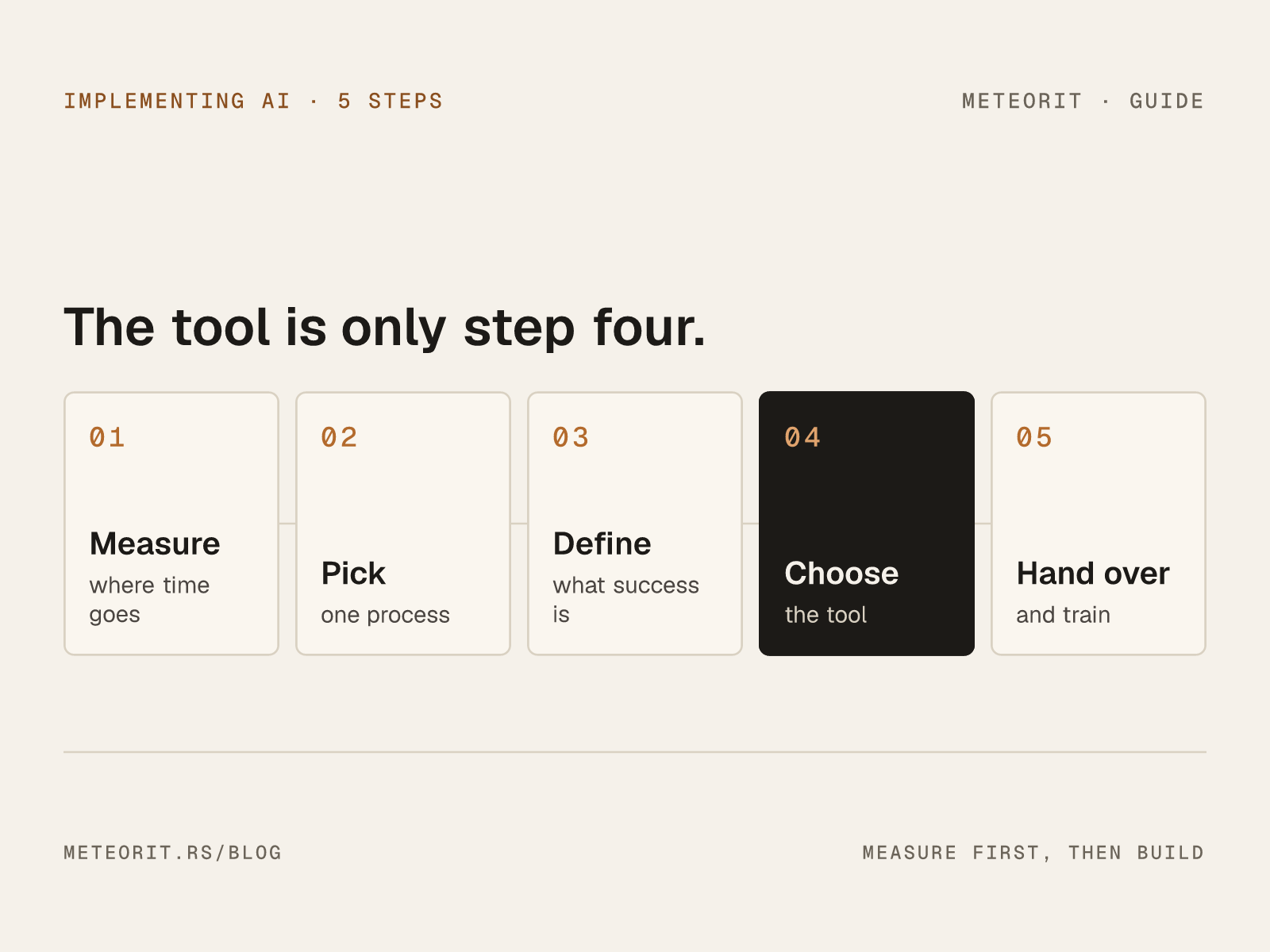
Interviews across the whole team, end-to-end workflow mapping, systems and data-flow analysis. Every inefficiency tied to a person, an hour count and an impact.
Build or buy, per opportunity. Feasibility assessed, roadmap prioritised. Fixed scope — no open-ended retainer to begin.
Build, integration, QA, onboarding and training. We hand off cleanly — or stay on as your AI operations team. Your call.
Two clients, four processes. Every figure below was measured in their diagnostic before we built anything.
A paper form, a ticket and four ERP documents, all retyped from data that already existed. Three systems connected, and manual input became a quality check.
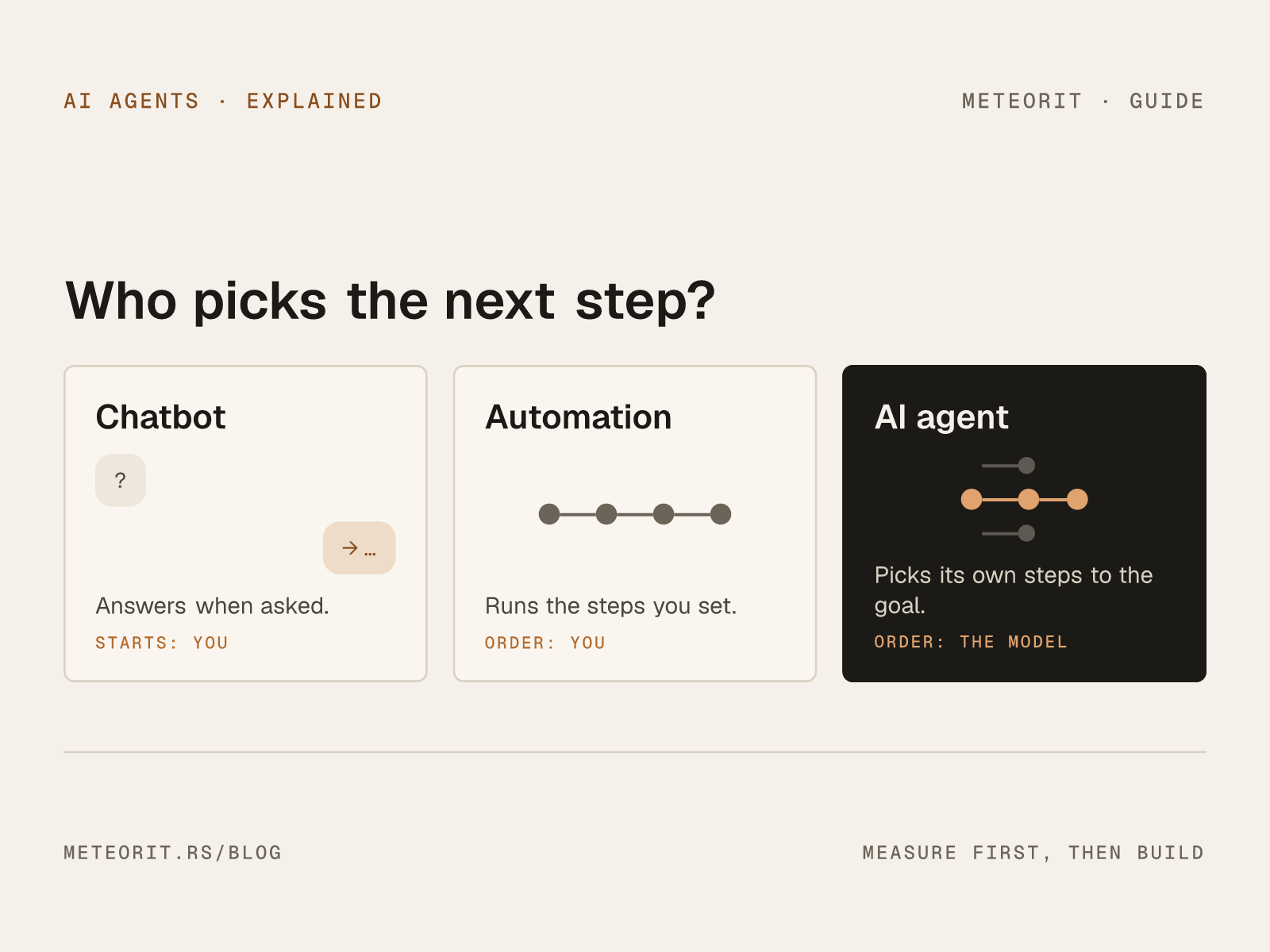
Across 2,500 field devices, a unit’s history meant cross-referencing three systems by hand. Now: serial number in, full history out, sources cited.
Years of journalist contacts sat unused in disconnected systems. The digest lands at 07:00 and surfaces who matters most for each new piece of work.
The agent shortlists speakers from an AI-enriched contact database, then drafts the invitation and the blurb. Researchers spend the time on the research.
Thirty minutes, no deck. Describe the process that hurts; we’ll tell you what it costs you today and whether automating it is worth doing.
Book the call →