
Journal/Strategy/Reading list: the six papers worth your weekend.
Reading list: the six papers worth your weekend.
Six things that — read in this order — give an operator a working mental model of how AI in business works in 2026.
Published
Nov 28, 2025
Reading time
5 minutes
Category
Strategy
Fig. 13 · Object OBJ-1128Trajectory: paper → posture
This is a reading list for operators — founders, COOs, finance leads, ops managers — who want a working mental model of how AI in business actually works, without enrolling in a course. Six papers, in order, over a weekend or two. Each one earns its place because it answers a question the others don't.
The order matters. Read top-down.
01. Attention Is All You Need — Vaswani et al., 2017
The paper that introduced the transformer architecture, which is the substrate underneath every model you have heard of. You do not need to follow the math. You do need to understand the central idea: that a model can learn what to pay attention to, in a piece of text, end-to-end from data alone.
This is the paper that changed the shape of the field. Read it for the diagram, the intuition, and the moment in section 3 when the abstract becomes concrete.
02. Retrieval-Augmented Generation — Lewis et al., 2020
The original RAG paper. Almost every operator-facing AI feature you will build in 2026 has retrieval somewhere in it, and almost everyone gets retrieval wrong. Reading this once gives you the vocabulary to ask the right questions when a vendor pitches you a "knowledge assistant."
It also gives you, free, the answer to why your first RAG system disappointed: the retrieval part is doing more of the work than the generation part, and you weren't measuring it.
Most "AI quality" problems are retrieval problems wearing a generation costume.
— working note, after the third such project
03. The State of AI 2025 — McKinsey
A non-technical anchor. The number that matters is 21%: the share of GenAI adopters who have actually redesigned a workflow around the technology. Most adoption is wallpaper. The 21% are the ones capturing measurable EBIT impact.
Read it to understand why the gap between "we use AI" and "AI changed our P&L" is structural, not technical. This is the report we cite most often in discovery calls.
04. The GenAI Divide: State of AI in Business 2025 — MIT NANDA
Companion to the McKinsey piece. The headline number is 95% of generative AI pilots show no measurable P&L impact. Read it for the breakdown of where the 5% live — almost entirely in back-office work the C-suite does not get excited about.
Together, these two reports tell the same story from two angles: AI value is real, it is small as a share of all activity, and it is concentrated in unfashionable places.
05. Toolformer: Language Models Can Teach Themselves to Use Tools — Schick et al., 2023
The paper that, in retrospect, was the start of the agent era. The idea is simple: a model that calls APIs is dramatically more useful than a model that only talks. Once you grasp this, the entire "agent" conversation becomes easier to navigate.
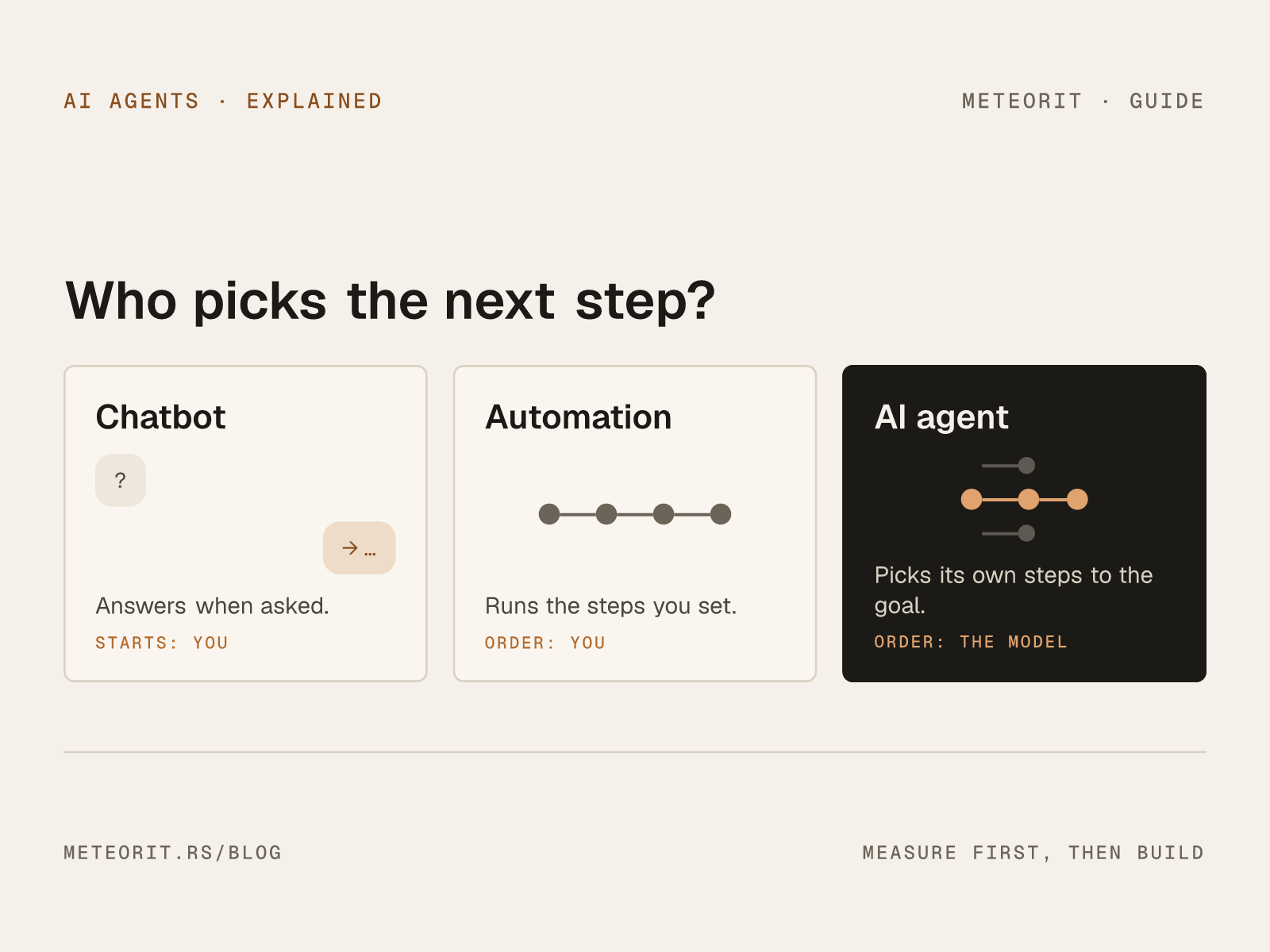
Read it as a primer on what an agent actually is — and what it is not. It is not, in particular, a thinking machine. It is a model with permission to push buttons.
06. Constitutional AI — Bai et al., Anthropic, 2022
A non-obvious choice for a business reading list, but useful for one specific reason: it makes vivid what it actually means to align a model's behavior with a written policy. If you operate in a regulated industry, or if your business has nuanced norms about what an agent should and should not say, this is the paper that gives you the vocabulary to talk about that with a vendor.
Read it the way you would read a primer on contract drafting: not for the technique, for the posture.
How to read these: not in one sitting. One paper per evening. Take a note for each one — three sentences — about what it changed in your mental model. That note is the deliverable, not the read.
A short closing
After these six, you will have something most operator-readers do not: a working frame for distinguishing between the parts of the field that are mature, the parts that are early, and the parts that are marketing. From there, the rest of the literature is much easier to navigate — and the conversations with vendors stop being one-sided.
Ovo je lista za čitanje za operatere — osnivače, COO-jeve, finansijske lidere, operativne menadžere — koji žele radni mentalni model toga kako AI u poslovanju zaista funkcioniše, bez upisivanja na kurs. Šest radova, redom, kroz vikend ili dva. Svaki zaslužuje svoje mesto jer odgovara na pitanje na koje ostali ne odgovaraju.
Redosled je važan. Čitajte odozgo nadole.
01. Attention Is All You Need — Vaswani et al., 2017
Rad koji je uveo transformer arhitekturu, supstrat ispod svakog modela za koji ste čuli. Ne morate da pratite matematiku. Morate da razumete centralnu ideju: da model može da nauči čemu da posveti pažnju, u tekstu, od kraja do kraja, iz samih podataka.
Ovo je rad koji je promenio oblik polja. Čitajte ga zbog dijagrama, intuicije, i momenta u trećem poglavlju kad apstraktno postaje konkretno.
02. Retrieval-Augmented Generation — Lewis et al., 2020
Originalni RAG rad. Skoro svaka AI funkcionalnost okrenuta operateru koju ćete graditi u 2026. ima preuzimanje negde u sebi, i skoro svi pogrešno tretiraju preuzimanje. Jednom pročitan, ovaj rad daje vam rečnik da postavite prava pitanja kad vam dobavljač predstavi „pomoćnika za znanje".
Daje vam i, gratis, odgovor na pitanje zašto je vaš prvi RAG sistem razočarao: deo za preuzimanje radi više posla od dela za generisanje, a vi ga niste merili.
Većina problema „kvaliteta AI-ja" su problemi preuzimanja prerušeni u kostim generisanja.
— radna beleška, posle trećeg takvog projekta
03. The State of AI 2025 — McKinsey
Netehničko sidro. Broj koji je važan je 21%: udeo onih koji su usvojili GenAI i koji su zapravo redizajnirali tok rada oko tehnologije. Većina usvajanja je tapeta. Tih 21% su oni koji hvataju merljiv EBIT efekat.
Čitajte ga da biste razumeli zašto je jaz između „koristimo AI" i „AI je promenio P&L" strukturni, ne tehnički. Ovo je izveštaj koji najčešće citiramo na razgovorima sa potencijalnim klijentima.
04. The GenAI Divide: State of AI in Business 2025 — MIT NANDA
Pratilac McKinsey-jevog rada. Naslovni broj je 95% generativnih AI pilota nema merljiv P&L efekat. Čitajte ga zbog raščlanjivanja gde živi tih 5% — gotovo isključivo u back-office radu koji rukovodstvo ne uzbuđuje.
Zajedno, ova dva izveštaja pričaju istu priču iz dva ugla: AI vrednost je stvarna, mala je kao udeo u svim aktivnostima, i koncentrisana je u nemodnim mestima.
05. Toolformer: Language Models Can Teach Themselves to Use Tools — Schick et al., 2023
Rad koji je, u retrospektivi, bio početak ere agenata. Ideja je jednostavna: model koji poziva API-jeve dramatično je korisniji od modela koji samo priča. Kada to shvatite, čitav razgovor o „agentima" postaje lakši za navigaciju.
Čitajte ga kao uvod u to šta agent zapravo jeste — i šta nije. Posebno: nije mašina za razmišljanje. To je model sa dozvolom da pritiska dugmad.
06. Constitutional AI — Bai et al., Anthropic, 2022
Neočigledan izbor za poslovnu listu za čitanje, ali koristan iz jednog specifičnog razloga: čini živim šta zapravo znači uskladiti ponašanje modela sa pisanom politikom. Ako poslujete u regulisanoj industriji, ili ako vaš biznis ima nijansirana pravila o tome šta agent treba i ne treba da kaže, ovo je rad koji vam daje rečnik da o tome razgovarate sa dobavljačem.
Čitajte ga kao što biste čitali uvod u izradu ugovora: ne zbog tehnike, nego zbog stava.
Kako čitati ovo: ne u jednom dahu. Jedan rad uveče. Napravite belešku za svaki — tri rečenice — o tome šta je promenio u vašem mentalnom modelu. Ta beleška je isporuka, ne čitanje.
Kratko zatvaranje
Posle ovih šest radova, imaćete nešto što većina operatera-čitalaca nema: radni okvir za razlikovanje delova oblasti koji su zreli, delova koji su rani, i delova koji su marketing. Odatle, ostatak literature daleko je lakši za navigaciju — i razgovori sa dobavljačima prestaju da budu jednostrani.
Filed under: STRATEGY · READING First published: Nov 28, 2025